Free News Websites With No Paywall
Ranked lists of free news sites rot in a month. The four categories that stay open on purpose, how to spot them, and what to do when your story is locked.
Published · Updated
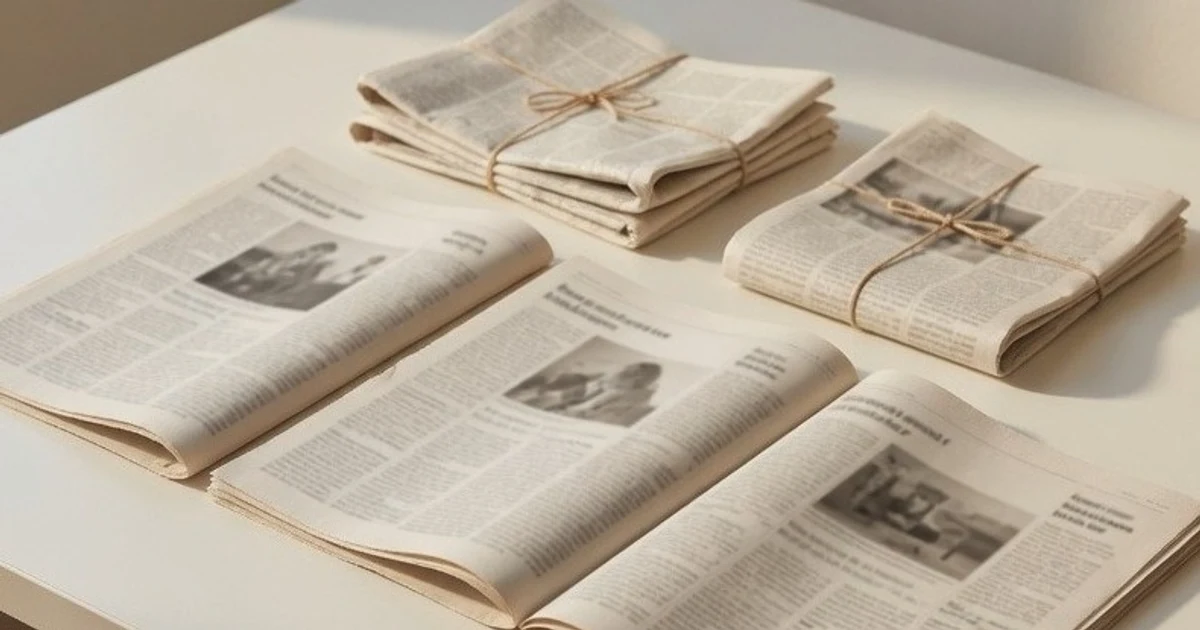
Searching for free news websites without a paywall returns a ranked list of fifty domains, and that list is wrong within a month. Outlets change their model, merge, or drop a meter onto an archive that was open yesterday. What does not change is the category: four kinds of newsroom stay open on purpose, and learning them is more durable than memorising any list of names. The Reuters Institute found that across 212 leading outlets in the United States and six EU countries, 53% still published with no wall at all.
Which kinds of news websites are still free in 2026?
Four categories cover almost everything readable without paying: public and nonprofit newsrooms, wire-fed copies, digital-born outlets, and titles you reach through a library card. Every one of them is free for a structural reason rather than a promotional one, which is why the category holds when individual domains do not.
The fourth category is the one nobody thinks of as a website at all. A public library card usually carries digital access to newspapers the library licenses on your behalf, which means titles that are firmly locked on the open web arrive unlocked through the library's own portal. It belongs on any honest list of free news websites without a paywall, and it is the only entry that still works when the piece is a genuine exclusive that no second newsroom touched.
That distinction is the whole method. A ranked list answers "which site is free this week." The categories answer "where do I look when the story I want is locked," which is the question you actually have at the moment you hit a wall. This page does not cover circumvention; the line between a legitimate route and a workaround is drawn in the honest guide to reading a locked story.
Why do public broadcasters and nonprofits stay open?
Because the wall is not their business model. Public broadcasters run on appropriation, licence fees or donations, and nonprofit newsrooms run on grants and membership, so restricting readers costs them their reason to exist without earning anything back. In the same Reuters Institute survey, every broadcaster examined still offered free digital content, and 94% of digital-born outlets did too.
In the United States the obvious example is NPR, which publishes its reporting in full and is strong on domestic politics and explainers. On investigations the equivalent is ProPublica, whose own stated policy — checked in September 2026 — is that its journalism is free to read and free for other newsrooms to republish. Both are floors rather than complete diets: they have editorial lines, they miss stories, and they are free to read every day.
The digital-born category is the one American readers under-use. Sites built for the web rather than migrated to it were the freest group in the study by a wide margin, and they carry technology, science and policy coverage that national dailies reach late.
How does wire-fed coverage make the same story free elsewhere?
A single agency report runs on a dozen sites the same morning, and those sites do not share an access policy. The original may sit behind a wall; the copy, rewritten or barely rewritten, frequently does not.
This is not a loophole. It is how the wire system has worked for a century: outlets pay for the feed and republish what they buy. Some meter you afterwards. Some never do. The reporting underneath is identical.
The practical rule follows directly. If a headline is on every homepage in the country, you do not need the one asking for a card — open the one that is not, and save the subscription tap for the piece only one newsroom has. The same logic extends past the border: coverage of a US story is written up in English by newsrooms in other countries, often with no wall and some distance from the domestic argument. That is a browser habit, and a good one — and it stays a browser habit: GetMyNews carries US newsrooms only, so nothing further down this page extends the reading to a foreign press.
How do you tell before you tap whether a page will open?
Read the outlet and then the summary. Outlets are consistent — a site that meters you today will meter you next month — and a hard wall almost always syndicates a promotional teaser instead of a real first paragraph.
- Open pages load and nothing interrupts.
- Metered pages give you real text, then a panel. Getting content first is the tell.
- Hard walls show a headline, a teaser and an offer. Paragraph four was never sent to your device.
A third signal is exclusivity: a story half the country is covering is usually open somewhere, because there is nothing exclusive to protect. The full set of tells, with what each kind of wall actually does, is in metered versus hard paywalls.
An aggregator can do this sorting for you rather than leaving it to the tap. GetMyNews tags every feed in its registry by access type, and the numbers are checkable: 92 public RSS feeds from 37 US newsrooms, of which 16 are tagged as hard paywalls and 2 as metered, the rest free. The ranking code applies a −1.2 penalty to a paywalled feed and −0.5 to a metered one, so freely readable newsrooms — NPR and ProPublica among them — surface ahead of locked ones in the same deck. Every one of those 37 newsrooms is American. If the category itself is unfamiliar, what a news aggregator actually is is the shorter explanation.
What does "free" cost the newsroom that published it?
Free to you is not free to produce. A statehouse reporter sitting through a three-week trial costs money, and a public-records lawsuit costs a great deal more. Advertising stopped covering that years ago, which is why the walls went up — and why the Reuters Institute's 2026 Digital News Report still finds only 17% of people paying for online news across its twenty-market comparison.
The honest use of free coverage is not "never pay." It is: do not pay by accident, for a story three other newsrooms published openly. Pay on purpose, for the outlet you actually return to. If you hit the same wall three times in a week, that is a subscription you want.
How do you use the free option in a normal week?
Smaller than it sounds, and mostly on a phone. Pew Research Center's platform data for August 2025 shows 56% of US adults often get news from digital devices against 32% for television and 7% for print, with 65% using news websites or apps at least sometimes — so the wall you meet is almost always a browser wall.
Keep two or three open newsrooms in rotation. A public broadcaster, a nonprofit, and one more that matches what you follow. That is a floor of coverage that does not expire.
When a page locks, spend ten seconds looking for the same event elsewhere before trying anything cleverer. If the story matters, someone else wrote it.
Use the library card for the exclusive piece. Investigations, long features and named columns are what a card is for, and the access is licensed rather than grey.
Do not collect homepages. Five sources you open beat thirty you bookmarked in 2023 and never visit. A long list of tabs is not breadth; it is a chore you will abandon in the first busy week, and the sources you abandon are usually the ones you added to feel well informed rather than the ones you read.
None of this requires a plugin or an account. Stop hunting for a master list of free news websites without a paywall, learn the four categories that stay open for structural reasons, and learn the five outlets you actually read. Most days the open version was one tap away and you were standing on the wrong one.
FAQ
Is a free news site less reliable than a paid one?
No. Reliability tracks editorial standards and funding stability, not access model. Public broadcasters, nonprofit investigative newsrooms and wire agencies all publish freely and are among the most heavily fact-checked operations in journalism, while a paywall protects revenue rather than quality. The useful check is the same either way: does the piece name its sources, and does another newsroom report the same facts?
Do library cards still cover major newspapers?
Frequently, yes. Many US public libraries license digital newspaper and magazine databases for cardholders and publish the exact title list on their own website, so a two-minute check tells you what yours includes. The access is fully licensed and paid for by the library, which makes it the only route that is both free to you and entirely unambiguous — including for stories no other newsroom covered.
- paywall
- sources
- news apps